ANUA
ANUA Azelaic Acid 10 + Hyaluron Redness Soothing Serum – Calm & Clear Skin Serum
ANUA Azelaic Acid 10 + Hyaluron Redness Soothing Serum – Calm & Clear Skin Serum
Couldn't load pickup availability
Your skin is red. Not dramatically, not all the time — but enough to notice in photos, enough to feel like your skin is always slightly irritated, always slightly reacting.
The ANUA Azelaic Acid 10 Hyaluron Redness Soothing Serum is built for exactly that state. A lightweight watery serum with 10% Azelaic Acid, three types of Hyaluronic Acid, and ANUA's Gentle Calming Complex — a blend of 7 types of Cica, Green Tea Leaf Water, Aloe and Blue Tansy Oil that gives the serum its natural green colour. No artificial dye. No fragrance. No alcohol. Just the actives your skin needs to stop reacting and start recovering.
HOW IT WORKS
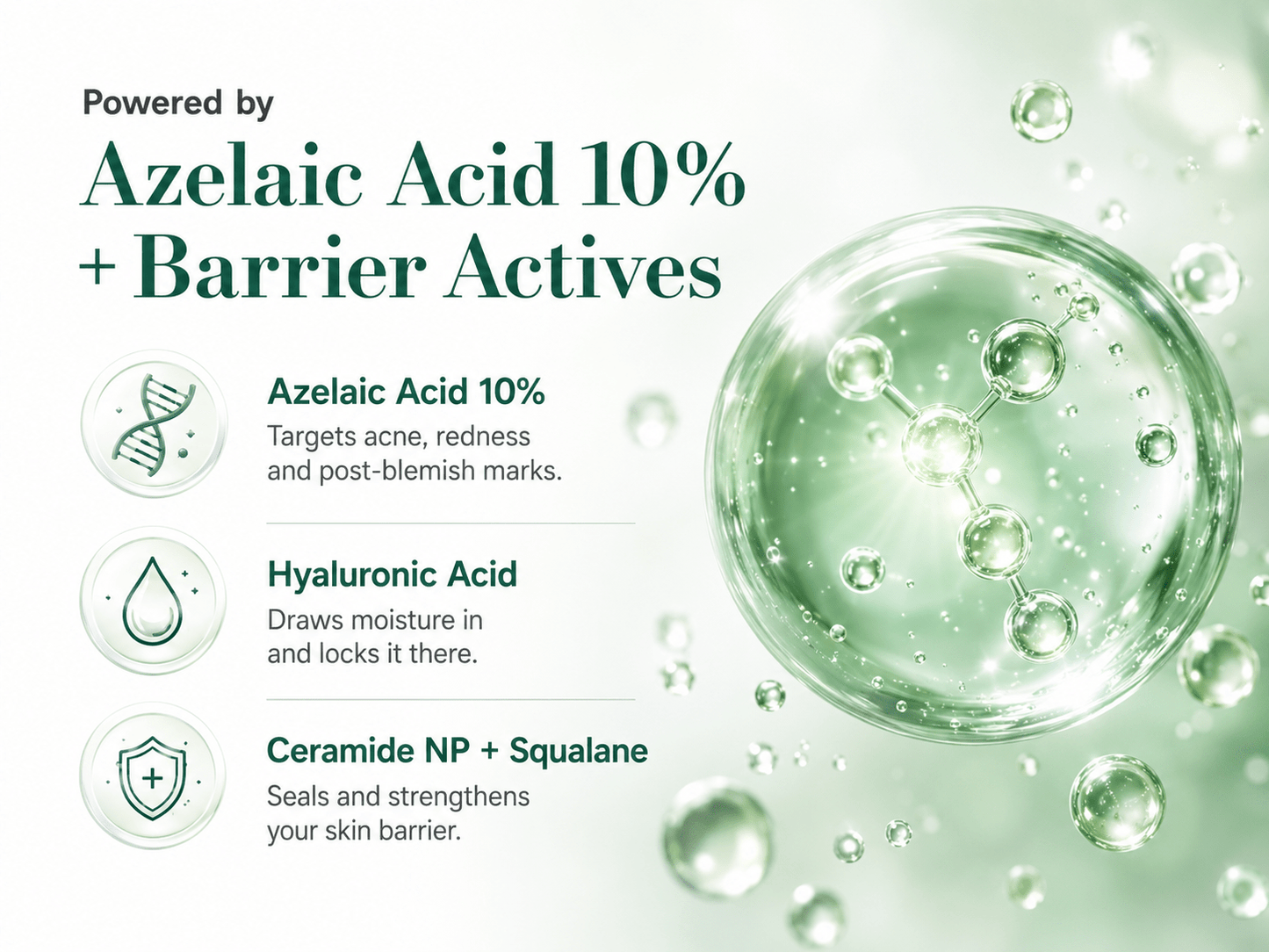
Azelaic Acid 10%. Azelaic Acid is a dicarboxylic acid that occurs naturally in grains like wheat, rye and barley — and in cosmetics, is lab-synthesised for stability and efficacy. At 10%, it works on multiple pathways simultaneously: it helps regulate the skin's inflammatory response (reducing visible redness), it targets the bacteria involved in acne formation, and it inhibits the enzyme (tyrosinase) responsible for producing excess melanin — addressing dark marks and uneven tone. Unlike AHAs, Azelaic Acid does not increase sun sensitivity, making it suitable for both AM and PM use.
Betaine Salicylate + Zinc PCA. Betaine Salicylate is a gentler, plant-derived form of BHA that helps clear pores and control sebum without the irritation risk of Salicylic Acid. Zinc PCA regulates sebum production and has antimicrobial properties — particularly relevant for acne-prone skin.
3 types of Hyaluronic Acid: Sodium Hyaluronate + Hydrolyzed forms. Different molecular weights of Hyaluronic Acid hydrate at different skin depths — surface plumpness plus deeper moisture retention. This prevents the dryness that higher-concentration Azelaic Acid formulas can sometimes cause.
ANUA Gentle Calming Complex™ — 7 types of Cica. Centella Asiatica Extract + Centella Asiatica Leaf Extract + Centella Asiatica Root Extract + Madecassoside + Asiaticoside + Asiatic Acid + Madecassic Acid. Each form of Cica delivers a slightly different aspect of barrier support and inflammation control. Together they make this formula one of the most densely Cica-loaded serums in the ANUA range.
Ceramide NP + Squalane + Panthenol. Barrier-supporting actives that lock in hydration, reinforce the lipid layer and accelerate recovery from irritation — keeping the skin comfortable through the exfoliation cycle that Azelaic Acid drives.
Fragrance-free. Alcohol-free. Oil-free. Silicone-free. Vegan. Fungal acne safe.
GOOD FOR
- Visible redness and reactive skin that flushes or feels persistently irritated
- Acne-prone skin — active breakouts, post-acne marks and congestion
- Uneven skin tone, dark spots and post-inflammatory hyperpigmentation (PIH)
- Oily and combination skin with enlarged pores or excess sebum
- Sensitive skin introducing an active for the first time
- All skin types — fragrance-free, alcohol-free, non-comedogenic
Suitable for sensitive skin. Fragrance-free, alcohol-free, oil-free, silicone-free, vegan, fungal acne safe. Clinically tested for redness reduction and low irritation.
HOW TO USE
- Apply after cleansing and toning, before moisturiser.
- Dispense 1–2 drops into your palm and press gently across the face. Pat — do not rub.
- Start slow: use 1–2 times per week for the first 2 weeks, then gradually increase to once daily, then twice daily as tolerated.
- Follow with moisturiser to seal in hydration and support barrier recovery.
- In the morning, always finish with SPF — even though Azelaic Acid is not photosensitising, daily sun protection is essential for any skin concern involving pigmentation or redness.
Note on texture: Azelaic Acid can leave a faint white residue on the bottle or skin at higher doses — this is the active ingredient itself crystallising, not a formulation issue. It is safe to use. If pilling or dryness occurs, reduce frequency and ensure skin is well moisturised after application.
FULL INGREDIENTS
Water, Azelaic Acid, Propylene Glycol, Sodium Hydroxide, Dipropylene Glycol, 1,2-Hexanediol, Panthenol, Hydroxyethylcellulose, Betaine Salicylate, Glycerin, Biosaccharide Gum-1, Ethylhexylglycerin, Allantoin, Dipotassium Glycyrrhizate, Melia Azadirachta Leaf Extract, Camellia Sinensis Leaf Water, Sodium Hyaluronate, Melia Azadirachta Flower Extract, Niacinamide, Aloe Barbadensis Leaf Juice, Beta-Glucan, Centella Asiatica Extract, Centella Asiatica Leaf Extract, Centella Asiatica Root Extract, Madecassoside, Asiaticoside, Asiatic Acid, Madecassic Acid, Squalane, Zinc PCA, Butylene Glycol, Pentylene Glycol, Caprylyl/Capryl Glucoside, Hydrogenated Lecithin, Ceramide NP.
Fragrance-free. Alcohol-free. Oil-free. Silicone-free. Paraben-free. Vegan. Fungal acne safe. Non-comedogenic tested.
FREQUENTLY ASKED QUESTIONS
What does Azelaic Acid actually do — and how is it different from other acids?
Azelaic Acid is a multifunctional active that works differently from AHAs and BHAs. It doesn't primarily exfoliate the skin surface — instead, it works inside the pore and at the cellular level to regulate the processes that cause redness, acne and dark marks. It inhibits tyrosinase (the enzyme that produces excess melanin), targets acne-causing bacteria and helps reduce the skin's inflammatory response. Unlike AHAs (Glycolic, Lactic), Azelaic Acid does not make skin sun-sensitive, so it can be used both morning and evening without additional photosensitivity risk. It is also one of the few actives considered safe for use during pregnancy by many dermatologists — though individual circumstances vary and medical advice should always be sought. This is educational information and does not replace advice from a qualified dermatologist.
Why does my Azelaic Acid serum leave a white residue?
Azelaic Acid is a solid crystalline compound dissolved into the formula. At higher application amounts — or in cooler temperatures — it can re-crystallise on the skin surface or around the bottle dropper, leaving a faint white residue. This is normal, expected and safe. It is not a sign of a faulty product or damaged formula. If it concerns you, reduce the amount applied per session (1–2 drops is sufficient) and ensure you spread it evenly before it sets. The residue absorbs or disappears within a few minutes of gentle patting.
Can I use this serum if I have very sensitive or reactive skin?
Yes — with a gradual introduction. Azelaic Acid is generally well-tolerated by sensitive skin and is less likely to cause irritation than most other actives at equivalent strengths. The formula here is specifically designed to buffer the active with a soothing complex (7 types of Cica, Panthenol, Allantoin, Ceramide NP, Squalane) to reduce the risk of reactivity. Start with 1–2 uses per week on cleansed, non-sensitised skin and increase gradually over 3–4 weeks. If persistent redness, stinging or peeling occurs, reduce frequency and allow the barrier to recover before continuing. This is educational information and does not replace advice from a qualified dermatologist.
Educational content only. Not intended to diagnose, treat or replace advice from a qualified dermatologist or healthcare professional.
Share